From insight to impact: turning geopolitics into strategic capability
Following the launch of the Center for Geopolitics and Corporate Strategy at the University of St.Gallen, co-founder Christoph Lechner explains how the Center intends to connect rigorous research with executive education, corporate decision-making and public debate — and where a university-based platform can offer something distinctive.
Interview by Viktoriya Zakrevskaya
The Center brings together research, teaching, executive education and collaboration with companies. How can these elements reinforce one another rather than remain separate activities?
We already have experience with this cycle. We might begin with a research study on a particular topic (for example, business ecosystems) and work towards publication in a leading academic journal. The findings can then be translated into an article for a management audience, introduced into executive education and applied in our work with companies.
It is not always easy to find a subject that works across all these levels. Geopolitics, however, clearly has that potential. The questions are academically substantial, highly relevant to executives and directly connected to the strategic decisions companies are making.
The objective is therefore not simply to combine different activities. It is to create a cycle in which research informs practice, engagement with companies produces better questions, and those questions flow back into research and teaching.
What can a university-based center contribute that companies cannot simply buy from an established geopolitical-risk or strategy consultancy?
The difference lies partly in the depth, time horizon and incentive structure.
Consulting firms are highly capable, but they normally work within the parameters of a commercial mandate. A university can investigate questions that may require several years of research before their full relevance becomes visible: for example, how Arctic shipping routes might develop and what that could mean for trade, infrastructure and corporate strategy.
We can also bring together expertise that is rarely combined within one commercial advisory team: political science, economics, law, management, technology, and artificial intelligence.
Our strength is deep thinking supported by rigorous methodologies. But depth alone is not enough. If it does not generate novel and useful insights, then we have created no meaningful advantage. The Center ultimately demonstrates that its research improves how organisations understand and respond to geopolitical change.
«Our strength is deep thinking. But it creates value only when it produces genuinely new and useful insights.»
– Christoph Lechner
Where do you see the greatest gap between how seriously executives talk about geopolitics and how much it changes their strategic decisions?
Companies are at very different stages.
Some large international corporations have already built substantial geopolitical capabilities. They have dedicated teams, established processes and the capacity to consider questions several years ahead: for example, how a change of US administration might affect tariffs, regulation or market access.
Other companies are still trying to understand their immediate exposure. A CEO may recognise that developments around the Strait of Hormuz, critical minerals or international trade routes could affect the business, but still lack a clear view of what this means for a particular supply chain, business unit or product line.
This is where geopolitical risk becomes difficult. The effects rarely remain within one category. War, trade routes, tariffs, critical resources, technology and regulation interact. The risks compound.
New analytical tools can increasingly map a global development down to the level of a company’s operations, business units or individual products. The next challenge is to move from identifying exposure to proposing credible strategic responses.
The real gap is therefore not necessarily awareness. It is the ability to translate geopolitical awareness into operational and strategic decisions.
If we meet again three years from now, what would success look like for the Center?
Success would mean producing cutting-edge insights and becoming a place that companies, policymakers, researchers and the public turn to when they need leading knowledge on geopolitics and corporate strategy.
It would also mean delivering projects that have made a visible difference. That is the ambition behind the idea of moving from insight to impact.
We have brought together a number of strong individuals, but we are still at the beginning. The next three years will be about building that team, producing distinctive work and demonstrating that our ideas can create real value.
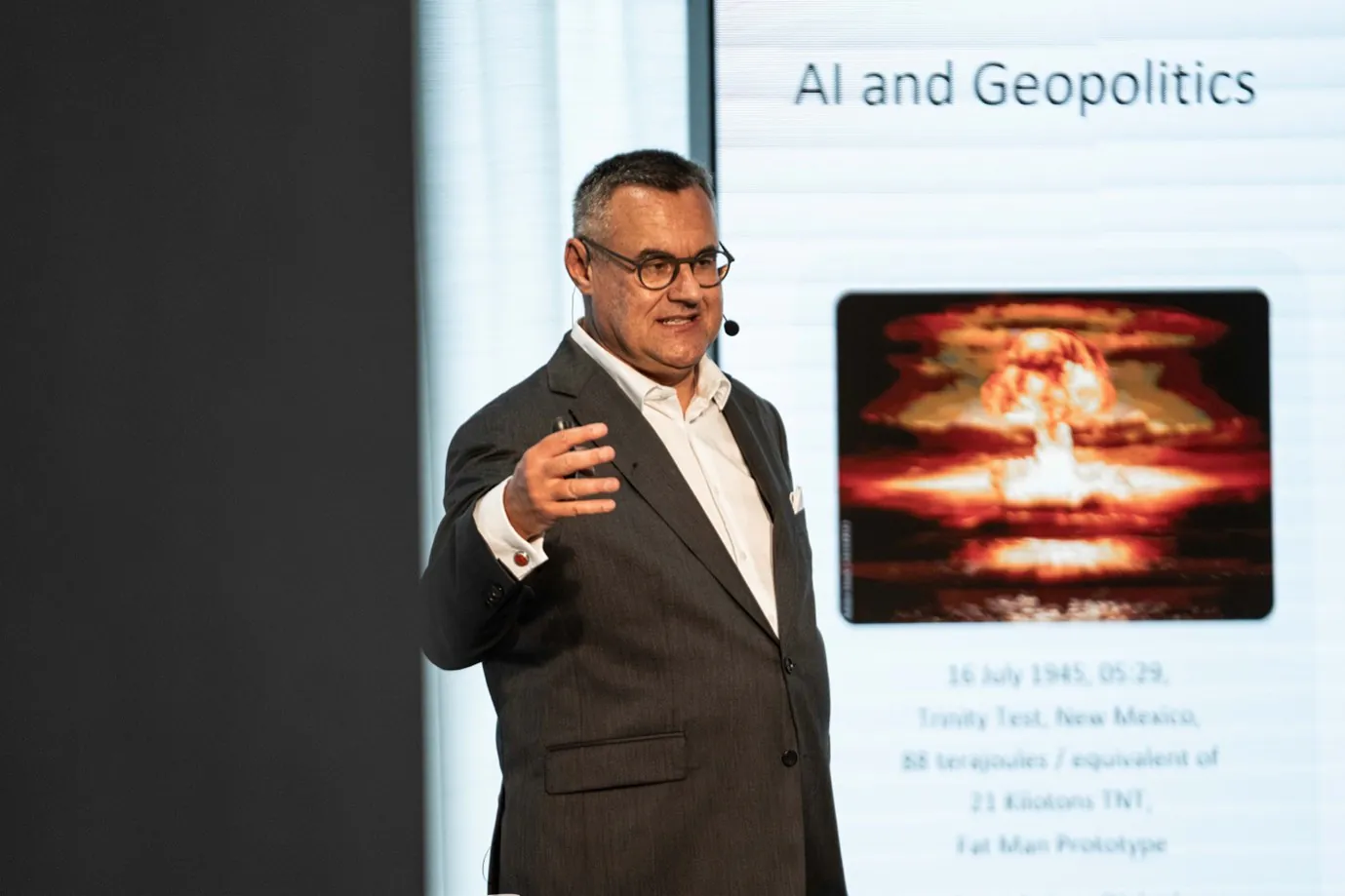
Photo: Leon Olbrecht. // Christoph Lechner during the opening of the Center for Geopolitics and Corporate Strategy, SQUARE (St. Gallen), October 2026.
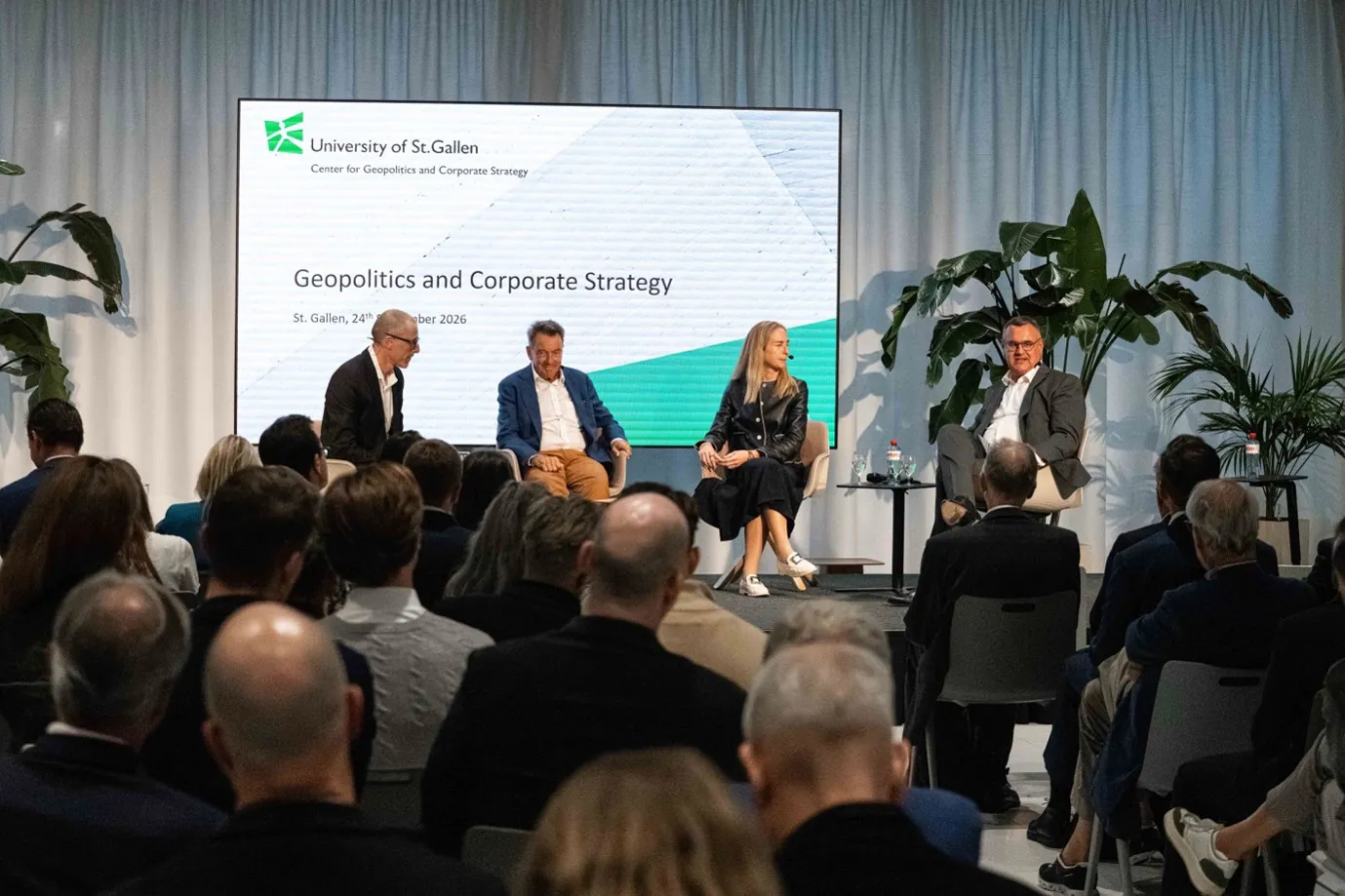
Photo: Leon Olbrecht. // Opening of the Center for Geopolitics and Corporate Strategy, SQUARE (St. Gallen), October 2026. Left to right: Thomas Burri (HSG), Peter Maurer (former ICRC), Alison Martin (Zurich Insurance), Christoph Lechner (HSG)