
Center for Geopolitics and Corporate Strategy

In an increasingly multipolar world, complex geopolitical challenges require data-driven research, education, and executive-level decision-making. To gain insights and address these challenges, the Center for Geopolitics and Corporate Strategy brings together expertise from five disciplines: strategic management, political science, economics, international law and taxation, as well as artificial intelligence and cybersecurity.
0+
Years of experience in global strategy and international business
0+
Articles published over the past 10 years
0+
Courses in bachelor’s and master’s degree programmes
0+
Team members working at the competence centre

Focus Areas

Research

Learn more about our research in geopolitics and corporate strategy, international business, and global business

Teaching

Explore our course offering in the University of St.Gallen’s master’s degree programmes

Executive Education

Discover our part-time Executive Education programmes focused on geopolitics and corporate strategy, business development, and strategic management

Transfer

Learn more about our Speaker Series, our podcast «WORLD IN PLAY», our transdisciplinary network of experts, and other activities through which we foster dialogue between academia, business, and society.

News

Kick-Off Event: New Center for Geopolitics and Corporate Strategy

11. June 2026

The new Center for Geopolitics & Corporate Strategy at the University of St.Gallen officially launches with a kick-off event on September 24, 2026. The Center brings together transdisciplinary expertise to help organizations better understand geopolitical developments and develop strategic responses to global challenges.

Research

The Center provides rigorous insights to students, executives, and society—supported by the University of St.Gallen and deeply rooted in rigorous academic research.

Our research focus areas

Geopolitics and Finance

Analysis of the impact of global political developments on financial decisions, financial actors, tax issues, and corporate financial structuring.

Geopolitics and Governance

Research on regulatory frameworks under geopolitical pressure, particularly in the context of regulators, international tensions, and global differences in AI governance.

Geopolitics and Operations

Examining the operational impact of geopolitical developments on companies, value chains, and their resilience to geopolitical shocks.

Geopolitics and Conflict

Researching the impact of violent conflict on multinational companies, international trade flows, and location strategies.

Publications

Academic Publications

Our academic publications provide insights into current research and innovative developments in geopolitics and strategy.

Whitepaper Series

Our Whitepaper Series bridges academic research and practical application, offering solutions to current challenges in business and society.

Teaching

Geopolitics and its Impact on Corporate Strategy (8,227)

Master in General Management (MGM)
Lecturers: Prof. Dr. Christoph Lechner, Prof. Nikolas Lang

This grand-challenge course by the chairs of Christoph Lechner and Nikolaus Lang (BCG) examines how geopolitical forces such as great-power competition, trade conflicts, and technology rivalry shape corporate strategy. What makes it special is the close integration of academic strategy research with BCG practice across ten forces of geopolitics, as well as real-world case studies such as ASML, drones and robotics, and the wine trade. The format is intensive and interactive, featuring Oxford-style debates, a 2050 scenario simulation, and an ongoing group project. Assessment is based on active participation, the Oxford debate, and a final group presentation.

Cases in International Affairs (8,350)

Master in International Affairs and Governance (MIA)
Lecturer: Prof. Ph.D. Elsa Clara Massoc
In this MIA course by Elsa Massoc, students write an original case study on a real decision problem in international affairs—becoming case authors rather than mere readers. The distinguishing feature is this productive approach, which spans from problem definition and evidence gathering to the final teaching note and a student-moderated case discussion. Topics include strategic industries and industrial policy, global finance and sanctions, the geopolitics of the energy transition, and firms and global governance. Assessment is based on the written case study, the teaching note, the oral moderation, and an individual reflection memo.

Geopolitical Consulting (8,394)

Master in International Affairs and Governance (MIA)
Lecturers: Prof. Dr. Patrick Emmenegger, Timo Blenk

This practice-oriented consulting project at the intersection of geopolitics and corporate strategy is supervised by Patrick Emmenegger and Timo Blenk, CEO of the geopolitical consultancy Agora Strategy Group. The distinguishing feature is its genuine consulting character: teams work on real cases involving political risk and international crisis management and produce a policy brief. Experienced executives join the course as guests, and the final presentations take place at Swiss Re in Zurich in front of the local strategy team. The aim is to translate academic insights into concrete recommendations for companies.

International Management in the New Asia Pacific (7,248)

Master in General Management (MGM)
Lecturer: Prof. Dr. Björn Ambos
This Asia Compact block course by Björn Ambos is directly assigned to the MGM programme and takes place in the Autumn Semester 2026 in calendar week 45, with a kick-off session in St.Gallen and around five to six days of intensive on-site teaching in Singapore at the St.Gallen Institute of Management in Asia on Amoy Street. The distinguishing feature is the combination of international management with a focus on the New Asia Pacific and an on-site experience in the form of a business study mission, with company visits, guest talks by local industry insiders, fieldwork, and cultural insights in addition to lectures and case studies. It teaches how companies shape strategy and organisation in the dynamic Asia-Pacific region. The course can be combined with a second Asia Compact to create a continuous stay during the semester break.

International Politics and Market Economy (7,350)

Master in International Affairs and Governance (MIA)
Lecturers: Prof. Dr. Dominik Sachs, Prof. PhD. James Davis

This multidisciplinary MIA core course by Dominik Sachs and James Davis combines political science and economics to analyse the dynamic interactions between politics, law, and the economy. The distinguishing feature is the shared four-arena concept of polities, markets, firms, and courts, as well as the close linkage with the sister course 7,352; both address the same global challenges—such as trade and investment, finance, climate and the environment, and development—from four disciplinary perspectives. This course covers the arenas of politics and markets and develops problem-oriented, integrated thinking. At the end, all four instructors discuss a current issue in a panel.

International Law and Business Strategy (7,352)

Master in International Affairs and Governance (MIA)
Lecturers: Prof. Dr. Thomas Burri, Prof. Dr. Winfried Ruigrok

The sister course to 7,350 by Thomas Burri and Winfried Ruigrok examines the same global challenges from the perspective of international law and corporate strategy. The distinguishing feature is the integration of two otherwise separate worlds—law and business strategy—within the same four-arena framework, with each challenge examined first legally and then strategically. Thomas Burri represents international and European law; Winfried Ruigrok represents international management. Together with 7,350, this creates an integrated picture of global political, legal, and economic interrelationships.

Elites and Sustainable Value Creation, China, the US and the Global Political Economy (7,916)

Master in International Affairs and Governance (MIA)
Lecturer: Dr. Tomas Casas Klett
Tomas Casas Klett’s course analyses the role of elites and sustainable value creation in the global political economy, with a focus on China and the United States. The distinguishing feature is the HSG-developed frameworks Elite Quality Index (EQx) and Value Creation Ratio (VCr), which make it measurable whether elites create value or extract rents. The four-day block course combines theory and application across economics, politics, management, and sociology, and covers, among other topics, the impact of artificial intelligence on the power of elites. Assessment is based on a group presentation and an individual written paper.

Executive Education

In addition to their high academic quality, the Executive Education programmes at the Institute of Management (IOMS) offer an exclusive network of individuals, companies, research institutes, and cooperation partners. The focus is always on impactful learning combined with personal exchange with fellow participants, speakers, executives, and network partners.

The diverse industry backgrounds of our participants foster lasting cross-industry connections that make a valuable contribution to personal and professional development—whether within an organisation or in an entrepreneurial role.

Open Programs

For individuals, we offer public Executive Education in geopolitics and strategy. Our Executive Education programmes are modular and therefore offer a high degree of flexibility, allowing you to tailor your personal learning journey.

New: Geopolitics and Strategy
Our new two-day seminar, “Geopolitics and Strategy”, is designed for executives who want to assess geopolitical developments early and build them into strategic decisions. The focus is on geopolitical risks and opportunities, resilient supply chains, and how technological competition and global power shifts are reshaping business.


Customized Programs

Using modern learning techniques, we develop tailored corporate training programmes for all levels of your organisation—from the board and executive leadership to different management levels. New behaviours and mindsets spread throughout your organisation, enabling and accelerating a business transformation aligned with your strategic goals and designed for maximum impact for your organisation.

Our faculty and experienced team help your company develop a tailored learning solution that is directly aligned with your company’s specific strategic objectives. At the heart of our tailored programme is what your leaders need to learn in order to achieve your company’s goals in the context of geopolitics and strategy.

Exclusive In-House Seminars

Open Executive Education Programs exclusively for you at your location. The target group depends on the content of the respective training programme.

Geopolitics & Strategy Playbook

Development of a unique, well-suited corporate concept for successful geopolitical strategy development.
Practice-oriented case studies

Understanding geopolitical interdependencies and developing concrete implications for companies in an increasingly fragmented international environment.

Exclusive webinars

Making knowledge and current insights accessible to a broader part of your organisation.
Strategy sprints

Assess geopolitical developments, align strategic priorities, and translate insights into concrete actions—guided by focused, high-impact sessions together with HSG experts.
Value creation plan

How to develop a reliable and robust value creation plan in light of your company's geopolitical strategy.

Transfer

Designed for collaboration between the School of Management, the School of Economics and Political Science, the School of Law, and the School of Computer Science at the University of St.Gallen, we bring together expertise in management, economics, political science, law, AI, and cybersecurity in one team. Each school contributes its many years of experience, research, and expertise.

This diversity of perspectives is our most important asset—it enables us to disentangle complex, multi-layered macroeconomic developments and translate them into academically grounded, practice-relevant insights. With this unique approach, we address practitioners’ need for effective strategies and support companies in anticipating and navigating today’s geopolitically uncertain conditions.

We transfer this expertise through the following formats:

  • Speaker Series (work in progress)
  • HSG Alumni Exclusive Events (work in progress)
  • HSG Alumni Exclusive Webinar Series (work in progress)
  • Podcast (work in progress)
  • Practical collaborations (work in progress)
  • Geopolitics & Corporate Strategy Executive Summit (work in progress)

Podcast: WORLD IN PLAY – The St.Gallen Geopolitics Briefing

Power politics has moved into the operating model. A tariff decision resets a supply chain within weeks; an export-control list decides where the next plant gets built. WORLD IN PLAY takes one of these shifts apart each episode, with the person closest to it: a CEO, an investor, a policymaker, a researcher.

The podcast comes out of the Center for Geopolitics & Corporate Strategy at the University of St.Gallen, where strategists, economists, political scientists, legal and tax scholars, and AI researchers examine the same shifts from five angles.

One conversation a month. Analysis you can take into your next board meeting.

The first episodes of WORLD IN PLAY will be released soon.

Podcast in English.

Speaker Series

The Speaker Series brings leading figures from business, politics, and academia to the University of St.Gallen. It focuses on current geopolitical, economic, and technological developments and their significance for companies, society, and decision-makers.

Across different formats—from keynote talks and panels to one-to-one conversations—rigorous academic perspectives meet practical experience. The Speaker Series thus creates space for exchange, new perspectives, and joint discussion of the challenges shaping tomorrow’s international environment.

Tuesday, 13 October, 6.15–7.30 p.m.
SQUARE
«Lehman, Obama, G20: How the Fall of 2008 Recalibrated the Transatlantic Order»
Julia Friedlander, CEO, Atlantik-Brücke

Wednesday, 11 November, 2.30–3.30 p.m.
Main Building, Room 01-012
«Geopolitical Factors and their Interaction with Airline Industry»
Max Kownatzki, CEO, Eurowings

Further events for the fall semester are currently being planned and will be added to the website as soon as possible.

Transdisciplinary Expertise

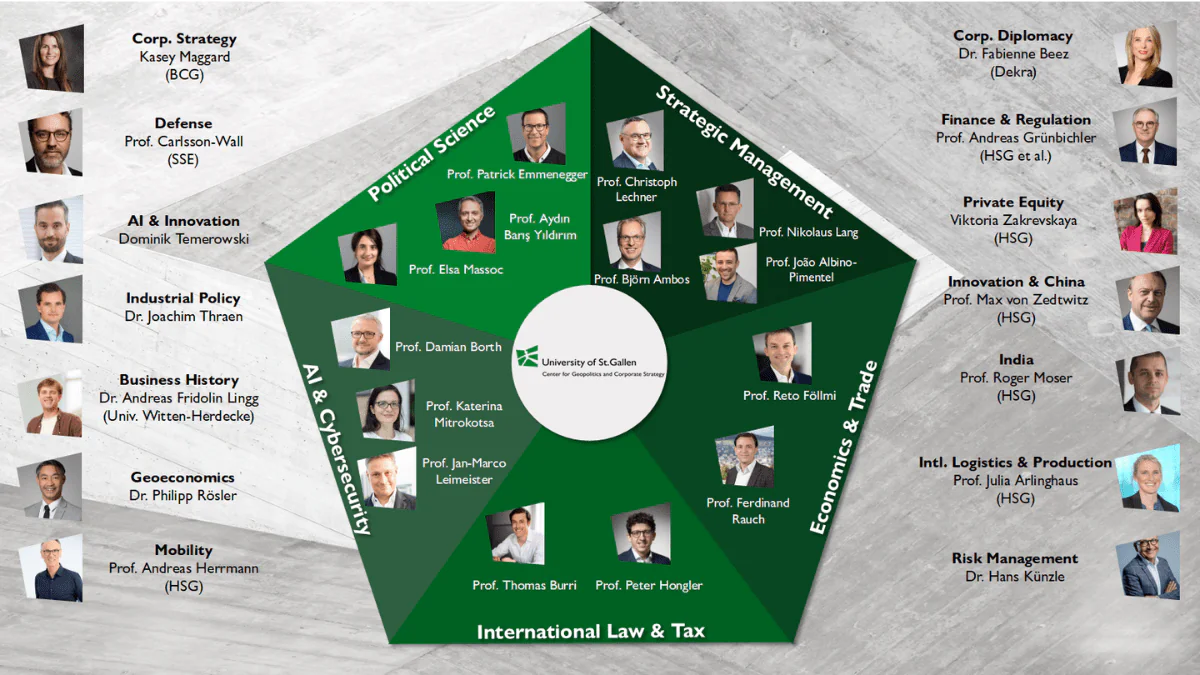
Our Center brings together leading experts from academia and practice with diverse areas of expertise related to geopolitics and corporate strategy. They are also available to provide analysis and context on current geopolitical developments and their impact on business, politics, and society.

The overview shows the thematic focus areas of our network. Click on the individual people to learn more about their expertise.

For media enquiries, interview requests, or support in finding the right expert, please contact:

Viktoriya Zakrevskaya
Associate, Center for Geopolitics and Corporate Strategy
University of St. Gallen
Email: Viktoriya.zakrevskaya@unisg.ch
Center Management

Prof. Christoph Lechner

Full Professor of Strategic Management, Director at the Institute of Management & Strategy (IFB-HSG), President of the Center for Geopolitics & Corporate Strategy, and Academic Director of the Master in General Management (MGM-HSG), University of St.Gallen (HSG)

  • Research and teaching focus on geopolitics and corporate strategy, digital platforms and ecosystems, growth strategies, and corporate strategy.
  • In addition to his university role, he is active as a private equity investor at Opaliton LLC, Senior Advisor to Boston Consulting Group (BCG), and a member of the Advisory Board of TTE Strategy.
  • Former member of the Board of Directors of Helvetia (2007–2022) and former Vice Chairman of Hügli (2000–2018) until its acquisition by Bell/the Coop Group.
  • Co-founder and Chairman of the Board of Directors of SwissVBS, a provider of digital learning solutions, from its founding in 2002 until its sale to BTS Global Business Consulting in 2019.
  • Started his career with the Deutsche Bank Group, with roles in vocational training, corporate banking, and investment banking in Germany and Singapore.
  • Geopolitics and corporate strategy
  • Strategy for digital platforms and ecosystems
  • Entrepreneurial growth strategy
  • Private equity investment strategy
  • Governance in the insurance sector
  • Management consulting

Prof. Thomas Burri

Professor of International and European Law and Vice President of the Center for Geopolitics & Corporate Strategy, University of St.Gallen (HSG)
  • Experienced international lawyer with close ties to politics and business.
  • Author of high-ranking academic publications, including in Nature Machine Intelligence.
  • Founder of the University of St.Gallen Grand Challenge.
  • Enjoys working interdisciplinarily at the interface of academia and practice.
  • International law
  • AI governance and regulation
  • Interfaces between law and technology
  • Interdisciplinary collaboration between academia and practice
  • European and international legal frameworks for new technologies

Strategic Management

Prof. Björn Ambos

Full Professor of Strategic Management and Dean of the School of Management, University of St.Gallen (HSG)
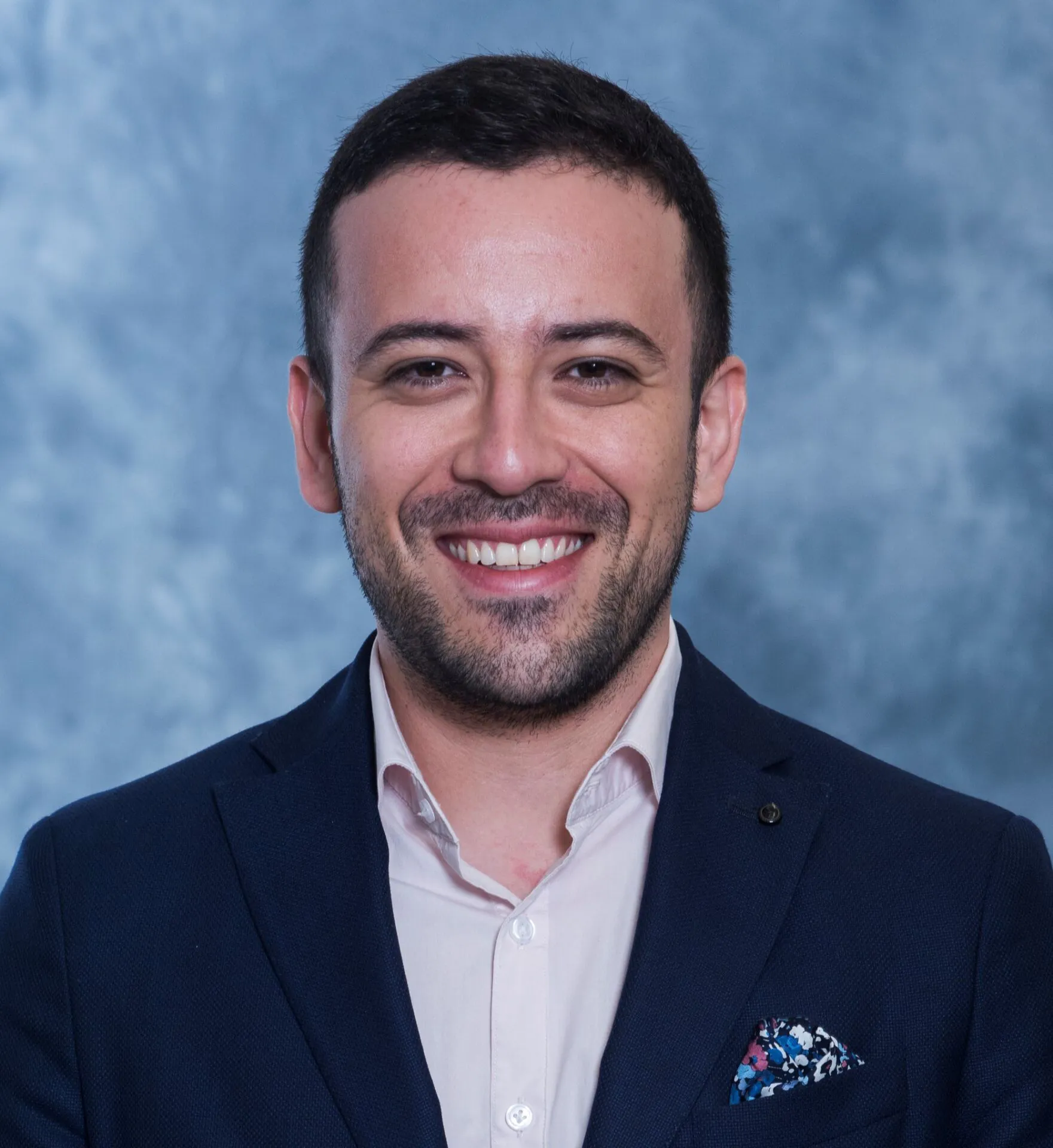
  • Research and teaching focus on strategic management and international management, with a particular emphasis on multinational companies, cross-border knowledge transfer, and innovation.
  • Regularly publishes in leading academic journals, including Journal of International Business Studies, Strategic Management Journal, and Organization Science.
  • Presented research and delivered lectures at more than 80 universities and academic conferences worldwide over the past ten years.
  • Currently Dean of the School of Management at the University of St.Gallen (HSG).
  • Previously held academic positions at renowned universities and business schools, including WU Vienna, the University of Edinburgh, the University of Hamburg, Bocconi University, INSEAD, and Florida International University.
  • Strategy of multinational companies
  • International management
  • Cross-border knowledge transfer
  • Innovation management in global companies
  • Leadership of business schools and higher-education strategy

Prof. João Albino-Pimentel

Professor of International Management, University of St.Gallen (HSG) (incoming)
  • Expert in global strategy, nonmarket strategy, and corporate political activity, with a particular focus on geopolitics and societal challenges.
  • Research on how multinational companies use corporate and nonmarket strategies to manage geopolitical fragmentation, political risks, sanctions regimes, violent conflicts, and societal crises—and to develop strategic opportunities from them.
  • Publications in leading academic journals, including Journal of International Business Studies, Strategic Management Journal, Research Policy, and Global Strategy Journal.
  • Member of editorial review boards of major journals, including Journal of International Business Studies, Strategic Management Journal, Journal of International Business Policy, Business & Society, and Global Strategy Journal.
  • Co-author of Strategor, the most widely used strategy textbook in the French-speaking world (9th edition in French; first edition in English).
  • International academic experience at the University of South Carolina, the Wharton School, Copenhagen Business School, the University of Minnesota, FGV São Paulo, HEC Paris, and Politecnico di Milano.
  • Corporate political strategy
  • Nonmarket strategy
  • Sanctions and political risk management for multinational companies
  • Impact of geopolitical fragmentation on companies
  • Corporate strategy in conflict regions

Prof. Christoph Lechner

Full Professor of Strategic Management, Director at the Institute of Management & Strategy (IFB-HSG), President of the Center for Geopolitics & Corporate Strategy, and Academic Director of the Master in General Management (MGM-HSG), University of St.Gallen (HSG)
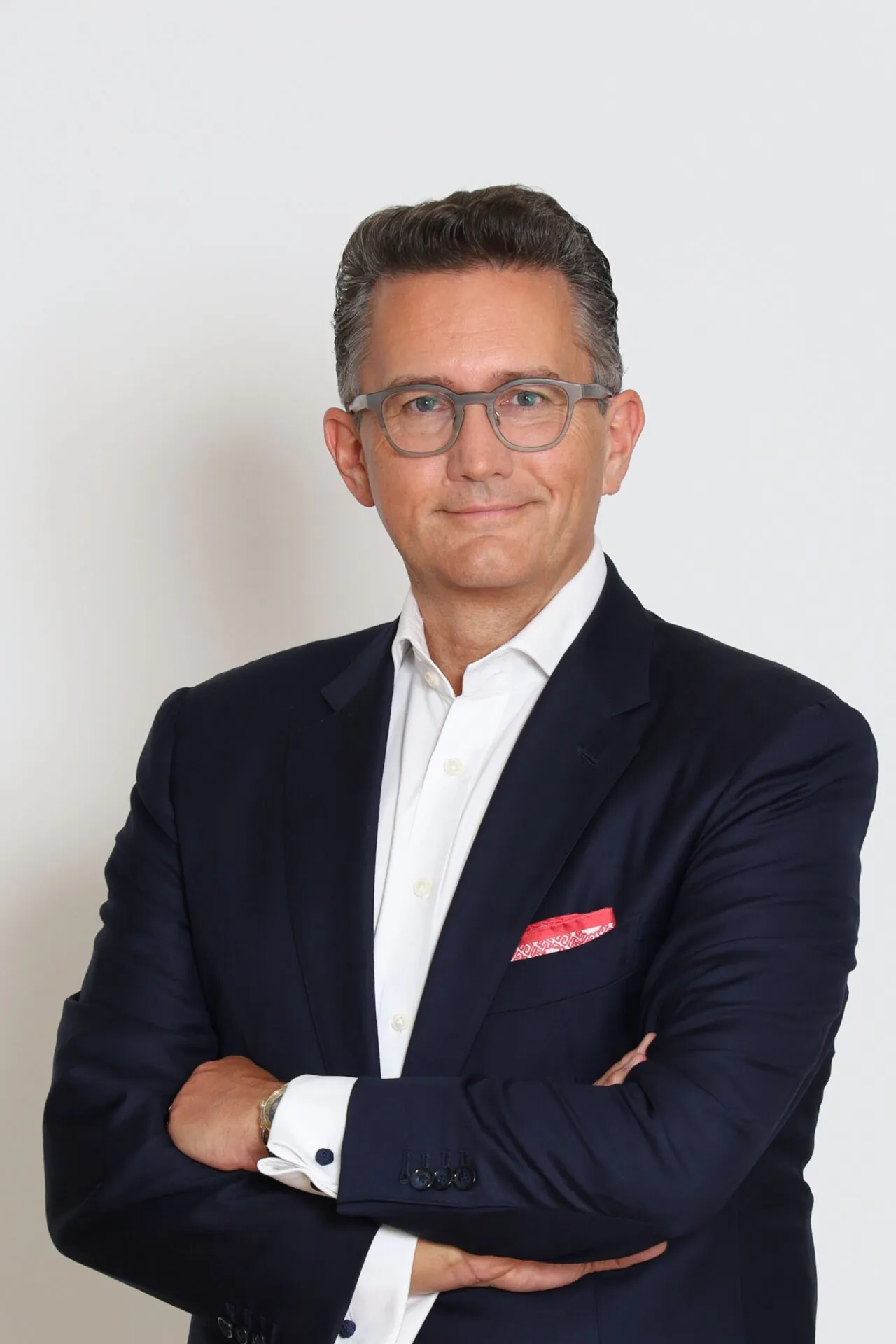
  • Research and teaching focus on geopolitics and corporate strategy, digital platforms and ecosystems, growth strategies, and corporate strategy.
  • In addition to his university role, he is active as a private equity investor at Opaliton LLC, Senior Advisor to Boston Consulting Group (BCG), and a member of the Advisory Board of TTE Strategy.
  • Former member of the Board of Directors of Helvetia (2007–2022) and former Vice Chairman of Hügli (2000–2018) until its acquisition by Bell/the Coop Group.
  • Co-founder and Chairman of the Board of Directors of SwissVBS, a provider of digital learning solutions, from its founding in 2002 until its sale to BTS Global Business Consulting in 2019.
  • Started his career with the Deutsche Bank Group, with roles in vocational training, corporate banking, and investment banking in Germany and Singapore.
  • Geopolitics and corporate strategy
  • Strategy for digital platforms and ecosystems
  • Entrepreneurial growth strategy
  • Private equity investment strategy
  • Governance in the insurance sector
  • Management consulting

Prof. Nikolaus S. Lang

Managing Director and Senior Partner, Global Leader of the BCG Henderson Institute and Global Vice Chair of the Global Advantage Practice, Boston Consulting Group (BCG)
  • Global Leader of the BCG Henderson Institute, BCG’s global think tank for developing new ideas and insights in strategy and innovation.
  • Over 30 years of experience in management consulting and global strategy; also Global Vice Chair of BCG’s Global Advantage Practice, focusing on competitive dynamics in an increasingly connected world.
  • Chair of BCG’s Center for Geopolitics and, in this role, advisor on a wide range of globalisation-related topics, including world trade, localisation, international joint ventures, and digital ecosystems.
  • Consulting experience in more than 50 emerging and established markets, including work in China, Malaysia, India, Turkey, Saudi Arabia, Brazil, Europe, and the United States.
  • Particular focus on geopolitical strategy and global mobility.
  • Geopolitical strategy consulting
  • Trends in global trade and localisation
  • International joint ventures
  • Strategy for digital ecosystems
  • Global mobility strategy
  • Corporate strategy in emerging markets

Economics & Trade

Prof. Reto Föllmi

Professor of International Economics, Director of SIAW-HSG and Vice President for Institutes & Executive Education, University of St.Gallen (HSG)
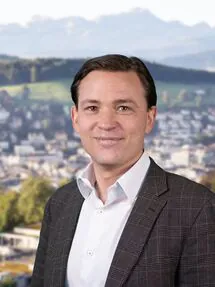
  • Professor of International Economics at the University of St.Gallen (HSG), Director of SIAW-HSG, and Vice President for Institutes & Executive Education; also a Research Fellow at the Centre for Economic Policy Research.
  • Research and teaching focus on international trade, macroeconomics, distribution, and economic growth; author of several books with Princeton and Oxford University Press and numerous publications in leading academic journals.
  • Member of the Board of Directors of Schwyzer Kantonalbank and Markant AG, and President of a family-owned real estate company.
  • President of the Programme Commission of Avenir Suisse and Head of the Commission for Corporate Statistics at the Federal Statistical Office, with extensive experience in applied economic research.
  • International trade policy
  • Macroeconomics
  • Income inequality and distribution
  • Theory of economic growth
  • Swiss economic policy
  • Governance in the cantonal banking sector
  • Real estate economics
  • Swiss statistics and economic data policy

Prof. Ferdinand Rauch

Professor of Economics with a focus on economic geography and international trade, University of St.Gallen (HSG)
  • Professor of Economics at the University of St.Gallen (HSG)
  • Research focus on economic geography, international trade, and urban economics
  • Former professor at the University of Oxford and Tutorial Fellow at Brasenose College
  • Research Fellow at CEPR and Fellow at the Kiel Institute
  • Member of the CESifo Research Network
  • Publications in leading international journals such as Quarterly Journal of Economics, Journal of Political Economy, and American Economic Journal
  • Economic geography
  • International trade patterns
  • Urban economics
  • Regional economic development
  • Research trends in economics

International Law & Tax

Prof. Thomas Burri

Professor of International and European Law and Vice President of the Center for Geopolitics & Corporate Strategy, University of St.Gallen (HSG)
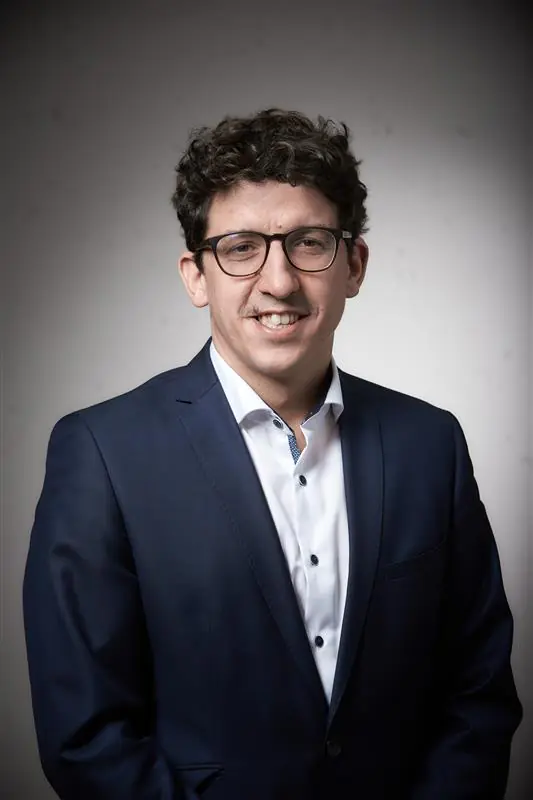
  • Experienced international lawyer with close ties to politics and business.
  • Author of high-ranking academic publications, including in Nature Machine Intelligence.
  • Founder of the University of St.Gallen Grand Challenge.
  • Enjoys working interdisciplinarily at the interface of academia and practice.
  • International law
  • AI governance and regulation
  • Interfaces between law and technology
  • Interdisciplinary collaboration between academia and practice
  • European and international legal frameworks for new technologies

Prof. Peter Hongler

Director of the Institute for Law & Economics and Professor of Tax Law, University of St.Gallen (HSG)
  • Professor of Tax Law at the University of St.Gallen (HSG).
  • Member of the UN Subcommittee on Environmental Taxation (2026–2029).
  • ESG tax expert for the United Nations Development Programme (UNDP) (2021–2022).
  • Member of the Board of Directors of Aderis AG and Alpha Rheintal Bank AG.
  • International tax law
  • Environmental and eco-taxes
  • ESG tax policy
  • UN tax policy initiatives
  • Corporate tax governance
  • Governance in the Swiss banking sector

AI & Cybersecurity

Prof. Damian Borth

Professor of Artificial Intelligence & Machine Learning, University of St.Gallen (HSG)
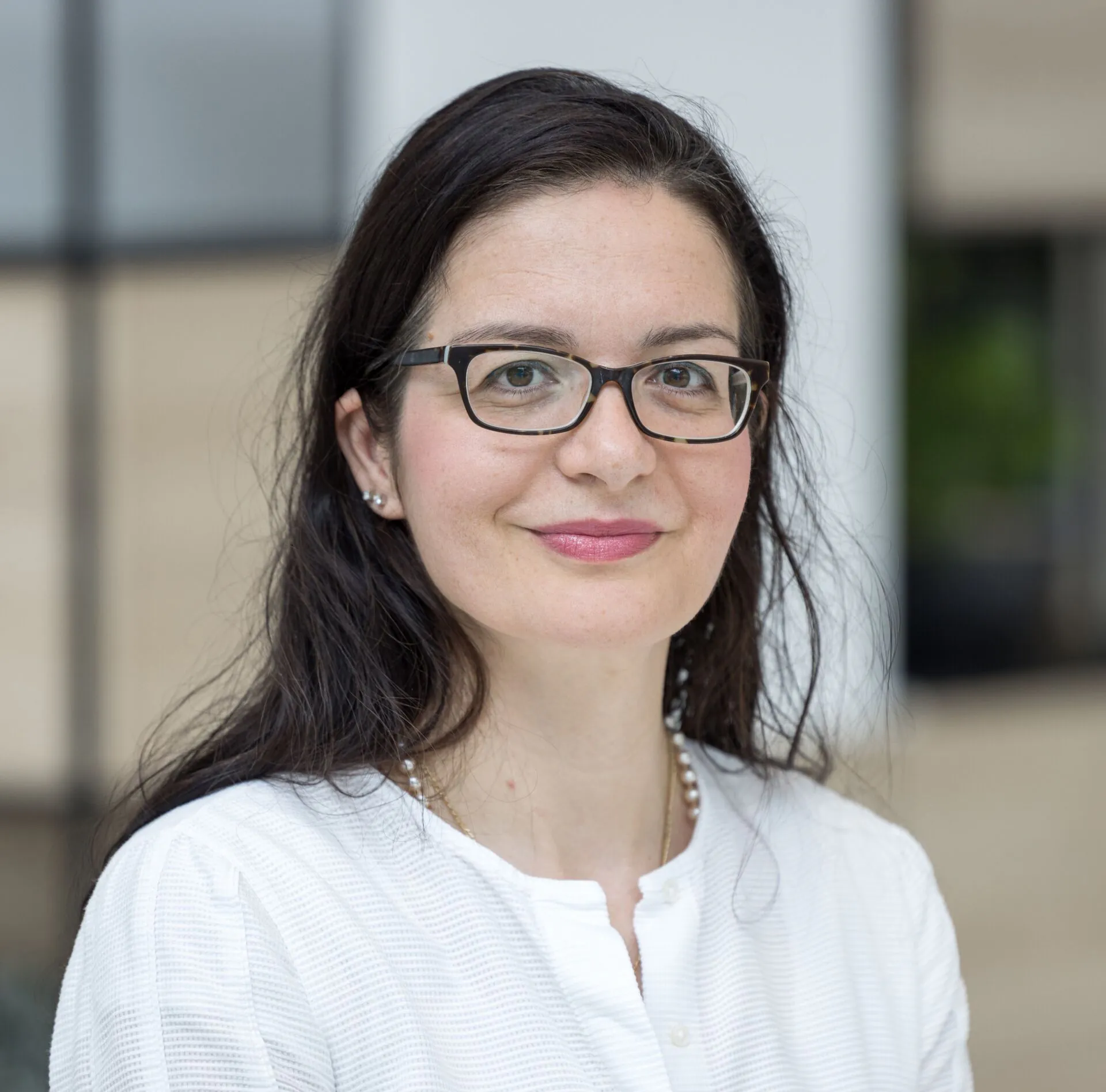
  • Director of the Institute of Computer Science at the University of St.Gallen (HSG) and Professor of Artificial Intelligence and Machine Learning (AIML). In parallel, founder of Weight Space Labs, a frontier AI lab selected for the SPRIND Next Frontier AI Challenge.
  • Previously, he was Founding Director of the Deep Learning Competence Center at the German Research Center for Artificial Intelligence (DFKI) in Kaiserslautern and Principal Investigator of the NVIDIA AI Lab at DFKI.
  • His research focuses on representation learning with deep neural networks, particularly in computer vision, remote sensing, and natural language processing. His research has received, among other awards, the ACM SIGMM Test of Time Award 2023, the Google Research Scholar Award 2022, the NVIDIA AI Lab at GTC 2016, the ACM ICMR 2012 Best Paper Award, and the McKinsey Business Technology Award 2011.
  • He is currently a member of the Board of Trustees of the International Computer Science Institute (ICSI) in Berkeley, California, as well as the Advisory Committee of the Roman Herzog Institute.
  • He completed his postdoctoral research at UC Berkeley and the International Computer Science Institute (ICSI) in Berkeley, where he was involved in big data projects at Lawrence Livermore National Laboratory. He earned his doctorate at the University of Kaiserslautern and the German Research Center for Artificial Intelligence (DFKI). During this time, he worked as a visiting researcher at the Digital Video and Multimedia Lab at Columbia University in New York City.
  • Research trends in AI and machine learning
  • Earth observation and remote sensing technologies
  • AI applications for climate and environmental monitoring
  • Technical research directions in AI

Prof. Katerina Mitrokotsa

Full Professor and Chair of Cybersecurity, University of St.Gallen (HSG)
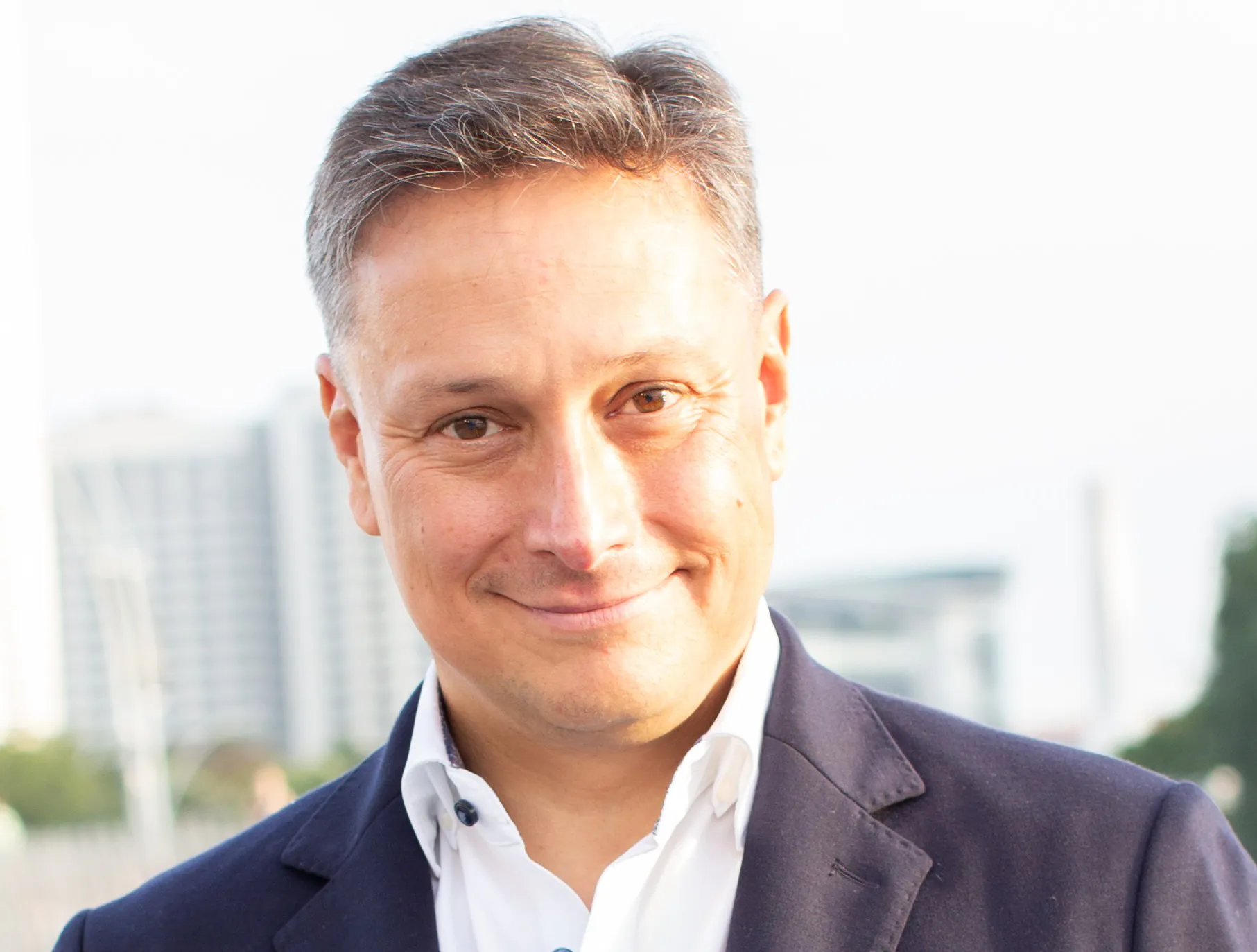
  • Leads the cybersecurity area at the School of Computer Science at the University of St.Gallen (HSG), where she has been a full professor and chair holder since August 2020.
  • Previously, she was Professor of Computer Science at Chalmers University of Technology in Sweden and gained extensive experience at leading European research institutions.
  • Further previous academic positions include visiting professorships at Tokyo Institute of Technology (Japan), ETH Zurich, and Vrije Universiteit Amsterdam (Netherlands), as well as a role as Visiting Scholar at Harvard University (USA).
  • Her research focuses on securing modern communication and digital infrastructures, with an emphasis on fundamental security and privacy issues.
  • She works on the development and analysis of provably secure authentication mechanisms as well as privacy-preserving computing protocols, thereby contributing to the foundations of trustworthy and resilient digital systems.
  • Cybersecurity policy and infrastructure
  • Digital privacy
  • Authentication and cryptographic security
  • European and international debates on data protection
  • Resilience of digital infrastructures
  • Research trends in cybersecurity

Prof. Jan-Marco Leimeister

Professor of Information Systems, University of St.Gallen (HSG)
  • Leads the Center for Digital Enterprise Transformation & Digital Sovereignty at the University of St.Gallen, funded by the Dieter Schwarz Foundation, and collaborates with client and supplier companies worldwide.
  • Leads the Agentic AI Lab with the aim of creating business value through AI innovations together with corporate partners worldwide—taking into account different regulatory frameworks and technology stacks.
  • Designs and delivers programmes for AI transformation and AI leadership for companies worldwide.
  • Digital sovereignty, particularly in Europe
  • AI transformation in companies
  • Applications of agentic AI
  • Compliance with AI regulations in different markets
  • AI leadership programmes for companies

Political Science

Prof. Patrick Emmenegger

Professor of Comparative Political Economy, University of St.Gallen (HSG)
  • Head of the Political Science Department at the University of St.Gallen (HSG).
  • Director of the GOVPET research project, which focuses on technological change and skills development.
  • Extensive research experience in state–business relations, varieties of capitalism, and political determinants of economic processes.
  • Comparative political economy
  • Varieties of capitalism
  • Labour market and skills policy
  • Business–government relations
  • Vocational education and training systems
  • Political economy of technological change

Prof. Elsa Clara Massoc

Assistant Professor of International Political Economy, SESP-HSG, University of St.Gallen (HSG)
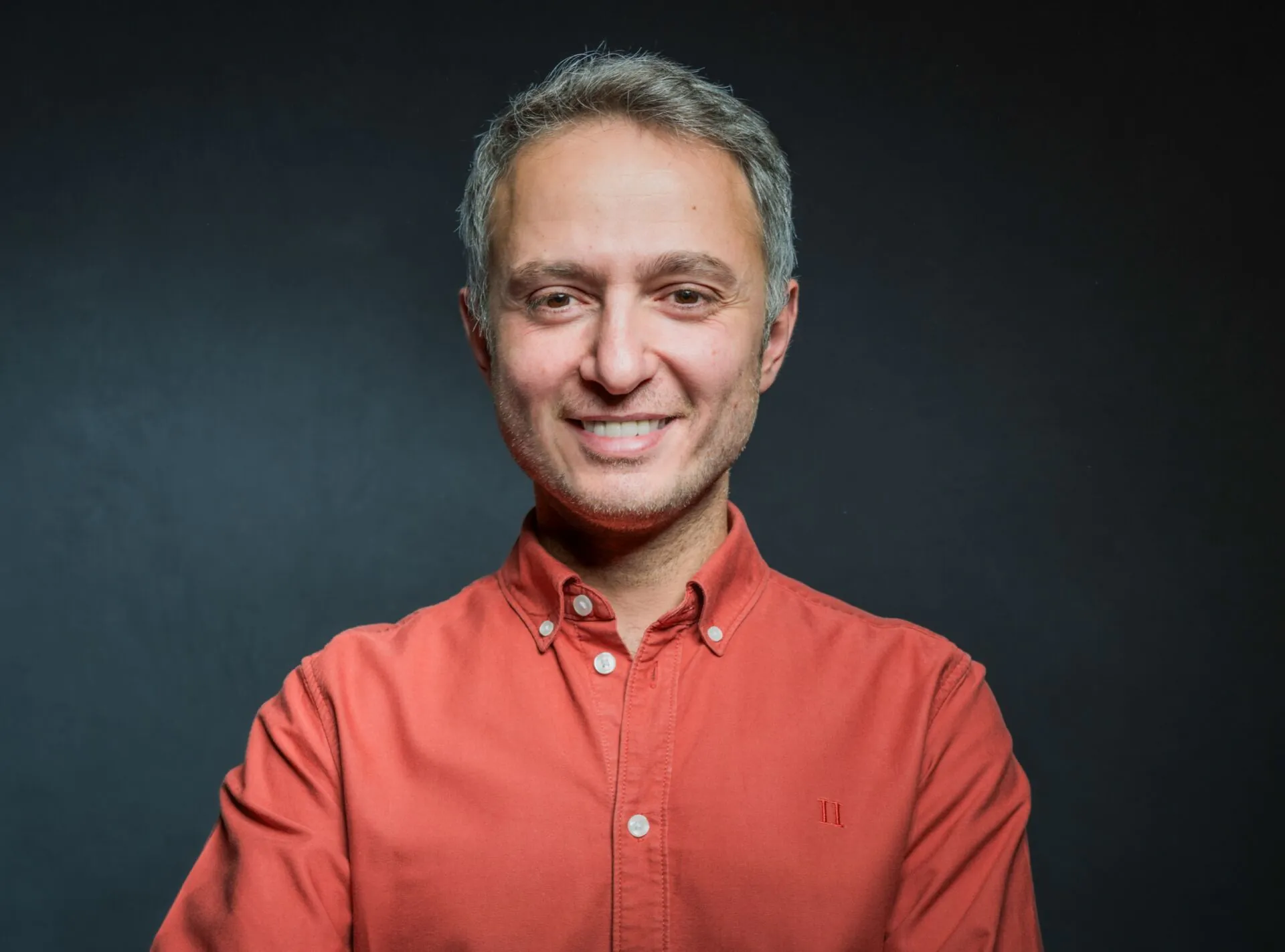
  • Research and teaching focus on the geopolitics of financial markets and industrial policy, with a particular emphasis on banks, state–finance relations, and the green transformation.
  • Publishes in leading academic journals, including Journal of European Public Policy, Review of International Political Economy, Politics and Society, and Competition and Change.
  • Academic Director of the Sciences Po–HSG Dual Degree Programme.
  • Previously at the University of California, Berkeley (PhD), the European University Institute, and the Center for Law and Finance at Goethe University Frankfurt.
  • Geopolitics of financial markets
  • Politics of the banking sector
  • State–finance relations
  • Green transformation and climate finance policy
  • EU industrial policy

Prof. Aydın Barış Yıldırım

Assistant Professor of Political Science, University of St.Gallen (HSG)
  • Political scientist specialising in international political economy (IPE) and international relations (IR).
  • Research focus on global value chains, trade policy, and the increasing geopoliticisation of economic policy decision-making processes.
  • Most recently at ETH Zurich; taking up an assistant professorship at the University of St.Gallen (HSG).
  • Current research on the political conditions of reshoring and relocating production to friendly countries (friend-shoring) by European companies in relation to China.
  • Examines how multinational companies influence government policymaking and international economic cooperation.
  • Global value chains and trade policy
  • International political economy
  • EU–China economic relations
  • Trends in reshoring and friend-shoring
  • Corporate lobbying of governments
  • Geopoliticisation of trade

Defense

Prof. Martin Carlsson-Wall

Professor, Stockholm School of Economics
  • Director and founder of the Center for Security and Resilience at the Stockholm School of Economics.
  • The Center is funded by the Swedish Armed Forces, the Swedish Civil Defence and Resilience Agency, the Swedish Defence Materiel Administration, SAAB, and AFRY.
  • The Center employs 50 researchers in management and governance, supply chain and resilience, and innovation and business models.
  • Defence economics and procurement
  • Civil–military resilience planning
  • Nordic and Swedish security policy
  • Supply chain resilience in a defence context
  • Public–private partnerships in defence
  • Governance of security institutions

Corp. Strategy

Kasey Maggard

Executive Director of the Center for Geopolitics, Boston Consulting Group (BCG)
  • Responsible for the global strategy and operational build-out of BCG’s Center for Geopolitics, advancing work with clients on geopolitical issues, and developing both rapid-response perspectives and foundational research on geopolitical topics.
  • Founding member of BCG’s Geopolitics & Trade Impact Team (2018) and co-initiator of the launch of the Center for Geopolitics (2024).
  • Over 20 years of professional experience at the intersection of international business, public policy, and economic development, with roles in Brazil, Mexico, Switzerland, the United States, and the United Kingdom.
  • Geopolitical risk management for companies
  • Impact of trade policy on companies
  • Geopolitical scenario planning
  • Interfaces between public policy and international business
  • Economic development
  • Geopolitical corporate strategy
  • Business risks in Latin America and emerging markets

Mobility

Prof. Andreas Herrmann

Professor of Business Administration and Mobility, University of St.Gallen (HSG)
  • Director of the Institute for Mobility at the University of St.Gallen (HSG) and Academic Director of the Executive Programme “Smart Mobility Management”.
  • Over 30 years of experience in research, teaching, and consulting; previously Professor of Marketing at the Universities of Mannheim and Mainz, and Director of the Institute for Media and Communications Management, the Center for Business Metrics, and the Center for Customer Insight at the University of St.Gallen.
  • Since 2013, Director of the Global School of Empirical Research Methods at the University of St.Gallen; since 2019, Visiting Scholar at the London School of Economics (LSE).
  • Long-standing research and industry projects with leading automotive companies, including Volkswagen, Audi, BMW, and Porsche.
  • Consulting engagements for numerous national and international companies, including Audi, Mercedes-Benz, BMW, Deutsche Bahn, Deutsche Bank, Roche, Porsche, RWE, and Credit Suisse.
  • Member of various advisory boards, including The Transformation Group (St.Gallen) and Derungs Licht AG (Gossau).
  • International research and visiting stays at renowned universities, including the University of Michigan, Columbia University, the Massachusetts Institute of Technology (MIT), Tongji University Shanghai, Karlstad University, and the University of Bologna.
  • Strategy in the automotive industry
  • The future of mobility
  • Marketing and consumer research methods
  • Trends in e-mobility and smart mobility
  • Empirical research methods
  • Industry consulting for automotive manufacturers
  • Market research in the mobility sector

Industrial Policy

Dr. Joachim Jan Thraen

Director, Global Policy & Strategy, MSD
Lecturer in strategy, geopolitics, and innovation
  • Advises executives on strategy and geopolitics, with a particular focus on industrial policy, innovation strategy, and China.
  • Leadership experience at Merck & Co / MSD, Johnson & Johnson, and UBS; previously a strategy consultant at Bain & Company.
  • Teaches at the University of St.Gallen (HSG) and at Saïd Business School, University of Oxford, on geopolitics, China, and global strategy.
  • Author of Mastering Innovation in China (Springer Gabler, 2015) and co-editor of Successful Technology Clusters in the 21st Century (De Gruyter, 2026).
  • Studied for a BSc in Economics & Economic History at the London School of Economics (LSE), an MA in International Affairs at the Fletcher School of Law & Diplomacy in Boston, and a doctorate in innovation management at the University of St.Gallen (HSG).
  • Industrial policy
  • China strategy and market entry
  • Innovation strategy
  • Geopolitics of technology
  • Strategy in the pharmaceutical and healthcare industry
  • Technology clusters
  • Business–government relations in Asia

AI & Innovation

Dominik Temerowski

Director AI & Innovation, Swisscom
  • Lead of the Swisscom AI Lab, focusing on creating business value through AI innovation.
  • Responsible for the company-wide AI Transformation Leadership Program for Swisscom’s top executives.
  • Led strategic technology partnerships and go-to-market activities at Swisscom and previously at Deutsche Telekom, including collaborations with AWS, Microsoft, Cisco, Dell, SAP, and Huawei.
  • Established innovation and growth areas in Cloud, Security, and Artificial Intelligence at Deutsche Telekom.
  • Fluent in Chinese with extensive experience in technology, competitiveness, and their geopolitical implications.
  • AI strategy for enterprises
  • AI transformation and leadership
  • Technological competition and geopolitics
  • Technology rivalry between the USA and China
  • Cloud and security partnerships
  • Technology strategy in the telecommunications industry

Geoeconomics

Dr. Philipp Rösler

CEO, Consessor AG
Former Vice Chancellor of Germany
  • Former Vice Chancellor of the Federal Republic of Germany and Federal Minister of Economics and Technology; previously Federal Minister of Health under Chancellor Angela Merkel.
  • Former member of the Managing Board of the World Economic Forum in Geneva, working closely with international leaders from business, politics, and civil society.
  • Currently active in management consultancy mandates and board of directors functions in leading Swiss and international companies, focusing on economy, innovation, geopolitics, and international cooperation.
  • German and European economic policy
  • Health policy
  • International economic cooperation
  • Global governance in the context of the World Economic Forum/Davos
  • Corporate governance
  • Innovation policy
  • Political and economic outlook for Germany

Finance & Regulation

Prof. Andreas Grünbichler

Adjunct Professor of Finance, University of St.Gallen (HSG)
Honorary Professor, University of Vienna
  • Independent board member and business consultant in the fields of banking, insurance, and asset management.
  • Over 30 years of C-level leadership experience, including roles as Group Chief Risk Officer (Group CRO) and CFO International Business of Zurich Insurance Group, as well as CFO/CIO of the Wüstenrot Group.
  • Co-CEO of the Austrian Financial Market Authority (FMA); represented Austria in CEBS and CEIOPS (predecessor organizations of EBA and EIOPA) as well as in the IAIS; co-designer and co-initiator of the Austrian Traded Index (ATX).
  • Former Full Professor of Finance and former Director of the Swiss Institute of Banking and Finance at the University of St.Gallen (HSG); previously Visiting Professor of Finance at the UCLA Anderson School of Management.
  • Research and consulting focus in corporate governance, asset management, financial market regulation, risk management, as well as capital markets and market microstructure; international expert mandates and consulting activities in the USA, UK, Japan, Switzerland, Germany, and Austria.
  • Banking and insurance regulation
  • Financial market supervision in the EU and Austria
  • Corporate governance
  • Risk management from a C-level perspective of banks and insurance companies
  • Capital market structures
  • Asset management
  • Financial market microstructure
  • Design of European stock indices (ATX)

Corp. Diplomacy

Dr. Fabienne Beez

Head of the DEKRA Representative Office Berlin and Vice President of the DEKRA Group
  • Dr. Beez has more than 15 years of experience in public and government affairs, regulatory strategy, and stakeholder management in industry associations and multinational corporations.
  • She leads DEKRA’s Berlin representative office, serving as a central interface between business, politics, regulation, and geopolitical developments in the areas of mobility, digitalization, defense, and sustainability.
  • In this role, she is responsible for DEKRA’s strategic positioning and the external affairs agenda in Berlin. Previously, she served as Senior Advisor for national and European transport policy at Deutsche Bahn.
  • Before joining DEKRA, Dr. Beez worked at the Federation of German Industries (BDI) and at Volkswagen AG.
  • During this time, she wrote her dissertation titled “Policy Formulation and Interest Representation: The Case of Setting CO₂ Emission Standards for New Passenger Cars in the European Union.”
  • EU regulatory issues
  • Corporate public affairs and lobbying strategy
  • Regulation of the automotive and mobility industry
  • EU emission and CO₂ standards
  • Regulation of the defense industry
  • Political landscape in Berlin and Germany
  • Digitalization policy
  • Stakeholder management

Innovation & China

Prof. Max von Zedtwitz

Professor of Strategic Management in Asia, University of St.Gallen (HSG)
  • Co-Lead of the Institute of Management in Asia at the University of St.Gallen as Managing Director. His research focuses on cross-border innovation and global research & development (R&D).
  • Former Professor of Technology and Innovation Management at IMD (Switzerland), Tsinghua University (China), and Skoltech (Russia), as well as Professor of International Management and Strategy at Copenhagen Business School (Denmark) and Kaunas University of Technology (Lithuania). Postdoctoral Visiting Fellow at Harvard University (USA).
  • Former Vice President at PRTM Management Consultants based in Shanghai and Lead Partner for the China Innovation Practice. Co-founder of a market intelligence company in Hong Kong.
  • Cross-border innovation
  • R&D strategy in China
  • Technology management in Asia
  • Global innovation management
  • Chinese-Western business relations
  • Technology ecosystems in Russia and Eastern Europe
  • Management consulting in Asia

India

Prof. Roger Moser

Director of the India Competence Centre and Vice Director of the Competence Center Mastering the Unknown, University of St.Gallen (HSG)
  • Over 20 years of experience in business development and collaboration with India, with a particular focus on deep-tech sectors.
  • Serves as a guest lecturer and consultant for various academic institutions and companies in India.
  • Develops decision intelligence platforms based on classic Delphi studies with expert panels as well as advanced GenAI solutions using OSINT and algorithms, including for geopolitical analysis.
  • Market entry and business development in India
  • Trends in the deep-tech sector
  • AI-supported geopolitical and OSINT analysis
  • Decision intelligence tools
  • Forecasting using the Delphi method
  • Economic relations between India and Europe

Risk Management

Dr. Hans Künzle

Board and executive committee roles
  • Longstanding international experience in the insurance industry at Helvetia (Vice Chairman), Canopius (Board member), Nationale Suisse (CEO), and at Winterthur Group (Head M&A, CEO Czech Republic)
  • Extensive risk management expertise in asset management, the insurance industry, and in Swiss and international charitable organizations (Chairman of the Investment&Risk Committee at Helvetia)
  • Various stragegic positionings in Swiss and international NGO’s, including UNICEF International (Chair of the Chairs of Unicef’s 33 National Committees), UNICEF Switzerland & Liechtenstein (Chairman), Pro Infirmis and EnableMe (in both as a Board member)

Private Equity

Viktoriya Zakrevskaya

Founder of Boldozer Consulting
  • Founder of Boldozer Consulting, specializing in geopolitics, corporate strategy, and positioning in complex international markets.
  • Works with clients in the commodities, private equity, technology, and regulated industries on competitive analysis, strategic communication, and growth narratives.
  • Lecturer at the University of St.Gallen (HSG) at the intersection of international law, corporate strategy, and strategic decision-making.
  • Former Executive Manager of the University of St.Gallen Grand Challenge on the EU AI Act, recipient of the Impact Award 2024.
  • International experience from Washington D.C., Stockholm, Kyiv, and Switzerland, focusing on geopolitical change, AI governance, and differentiated market positioning as sources of long-term competitive advantage.
  • Geopolitical risks in corporate strategy
  • Positioning in the commodities, private equity, and regulated industries
  • AI governance
  • Strategic communication
  • Analysis of competitive and market positioning
  • Geopolitical changes related to Eastern Europe and Ukraine

International Logistics & Production

Prof. Julia Arlinghaus

Chair of Logistics and Supply Chain Management, University of St.Gallen (HSG)
  • Chair of Logistics and Supply Chain Management and Director of the Institute of Production and Supply Chain Management at the University of St.Gallen (HSG).
  • Previously Head of the Fraunhofer Institute for Factory Operation and Automation (IFF), with a focus on industrial automation, smart factory systems, and the operational foundations of sovereign manufacturing capabilities.
  • Research on the architecture of global production networks under pressure and how dependencies, redundancies, and control structures shape the robustness and strategic autonomy of industrial systems.
  • Active at the intersection of AI-supported planning, decentralized decision-making, and supply chain resilience; advising companies and scientific policy committees on the strategic design of digital value chains.
  • Supply chain resilience and disruptions
  • Industrial automation
  • Smart Factory and Industry 4.0
  • Decentralized decision-making in production
  • AI in production planning
  • Strategic autonomy of industrial systems
  • Security of digital value chains

Business History

Dr. Andreas Friedolin Lingg

Postdoctoral Researcher, University of Witten/Herdecke
  • Economic historian and Research Director of the WittenLab. Future Lab Studium fundamentale at the University of Witten/Herdecke.
  • Research focus in the history of economic thought, the history of capitalism, and economic growth.
  • Founder and academic director of seven, an innovation platform and center for public collaboration at the University of Witten/Herdecke.
  • Most recently Hans-Christoph-Binswanger Fellow at the University of St.Gallen (HSG), Visiting Scholar at Columbia University, and Kenneth E. Boulding Fellow at the University of Mannheim.
  • Studies in Friedrichshafen, Munich, and Berlin with a focus on economic history, political science, public management and governance, as well as the philosophy of science and technology.
  • Economic history
  • History of capitalism
  • Long-term economic growth
  • History of economic thought
  • Philosophy of science in the context of economics
Contact
Do you need more information? I will be happy to help you.

Alina Sonnenschein

PhD Candidate, Research Associate
M.Sc.